Posters, Classroom Ideas & How to Participate in the Hunt
CIPHER FOR EDUCATORS
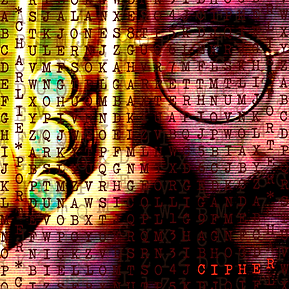
Invite students to decode a real-world puzzle inside a jazz album.
Cipher (Charlie Porter, PHP Records) hides nine audio clues across eight tracks that, when solved, point to a physical object hidden in the continental U.S. The verified finder redeems $10,000. It’s a fun way to get students listening closely, analyzing patterns, and thinking creatively about music.
Quick links
Printable Posters (share on campus)
Quick-start strategies for students
-
Listen for structure: repeated cells, contrasting sections, unusual meddles or rhythms.
-
Explore different letter↔note mapping possibilities, using simple ciphers (Caesar and Vigenère)
-
Consider rhythm codes: long/short patterns reminiscent of Morse; bar-line groupings.
-
Document every step: keep a solve log; verify each inference before advancing.
-
Look for possible hints in the album artwork and track titles

CIPHER Treasure Hunt Poster

Musical ciphers & codes — a quick primer
-
Musical ciphers & codes — a quick primer
-
Composers have long hidden names and messages in music by mapping letters to pitches or patterns to rhythm:
-
J.S. Bach — “B-A-C-H” (B♭–A–C–B♮ in German note names)
-
Johannes Brahms — “F–A–F / F–A–E” motto material (Frei aber froh / frei aber einsam)
-
Robert Schumann — “ASCH” (A–E♭–C–B) across Carnaval
-
Dmitri Shostakovich — “DSCH” (D–E♭–C–B) as a personal signature
These ideas—along with classic codes like Caesar and Vigenère—give students a concrete way to connect analysis, history, and problem-solving.
Musical Substitution Cipher Worksheet
Musical SubstitutionCipher Worksheet
This four-part worksheet guides your students through the creation and implementation of a musical substation cipher.
Classroom ideas (pick & run)
50-minute class
-
Play two short excerpts; ask students to mark any repeating “cells.”
-
Brainstorm plausible encodings (letters↔notes, rhythm patterns).
-
In pairs, attempt a mini-decode; share methods, not final answers.
2-class mini-lab
-
Day 1: guided listening + candidate-cell collection.
-
Day 2: decoding attempt; require a short methods paragraph and evidence for any claim.
Project / extra credit
-
Student teams document a full solve attempt (log, screenshots, audio time-codes).
-
Optional cross-over with math/CS/cryptography club.
Compose-your-own cryptogram
-
Students encode a short name/motto into a 16–32-bar piece; peers try to decode

FAQ (educators)
Do students need to buy anything? No purchase necessary—see rules on the album site. However, the CD which doubles as a cipher disk and the sheet music (helpful aids in the hunt) are available for purchase.
Is this only for music majors? No. Musicians, STEM students, and puzzle fans can collaborate.
Can you mail printed posters? Yes—email quantity and address to info@charlieportermusic.com.
Press/media kit? Available to credentialed media on request (email above).
Contact